Chick care
Your first 48 hours with day-old chicks
Heat, water, feed and a calm corner — a simple checklist for bringing new chicks home and getting them off to a strong start.
· 2 min read · Craft Homestead
The first two days set the tone for a chick's whole start. The good news: chicks don't need much. They just need it to be right.
Before they come home
Set the brooder up a day early and let it warm, so you can check temperatures before any chicks are inside. You'll want:
- A draft-free brooder — a stock tank, a large tote or a purpose-built box, with room for chicks to move away from the heat.
- A heat source — a brooder plate or a securely mounted heat lamp.
- Bedding — pine shavings. Avoid cedar, whose aromatic oils are hard on young lungs. For the first few days, lay paper towels over the shavings so chicks learn the difference between food and bedding.
- A chick waterer and feeder, plus a bag of chick starter.
Get the temperature right
Aim for about 95°F at chick level for the first week, then lower it about five degrees each week until they're feathered. Keep one side of the brooder warm and the other cooler, and let the chicks tell you how you're doing:
- Huddled tightly under the heat and peeping loudly: too cold.
- Pressed against the far walls, panting: too hot.
- Spread out, eating, drinking and napping in little piles: just right.
Water first
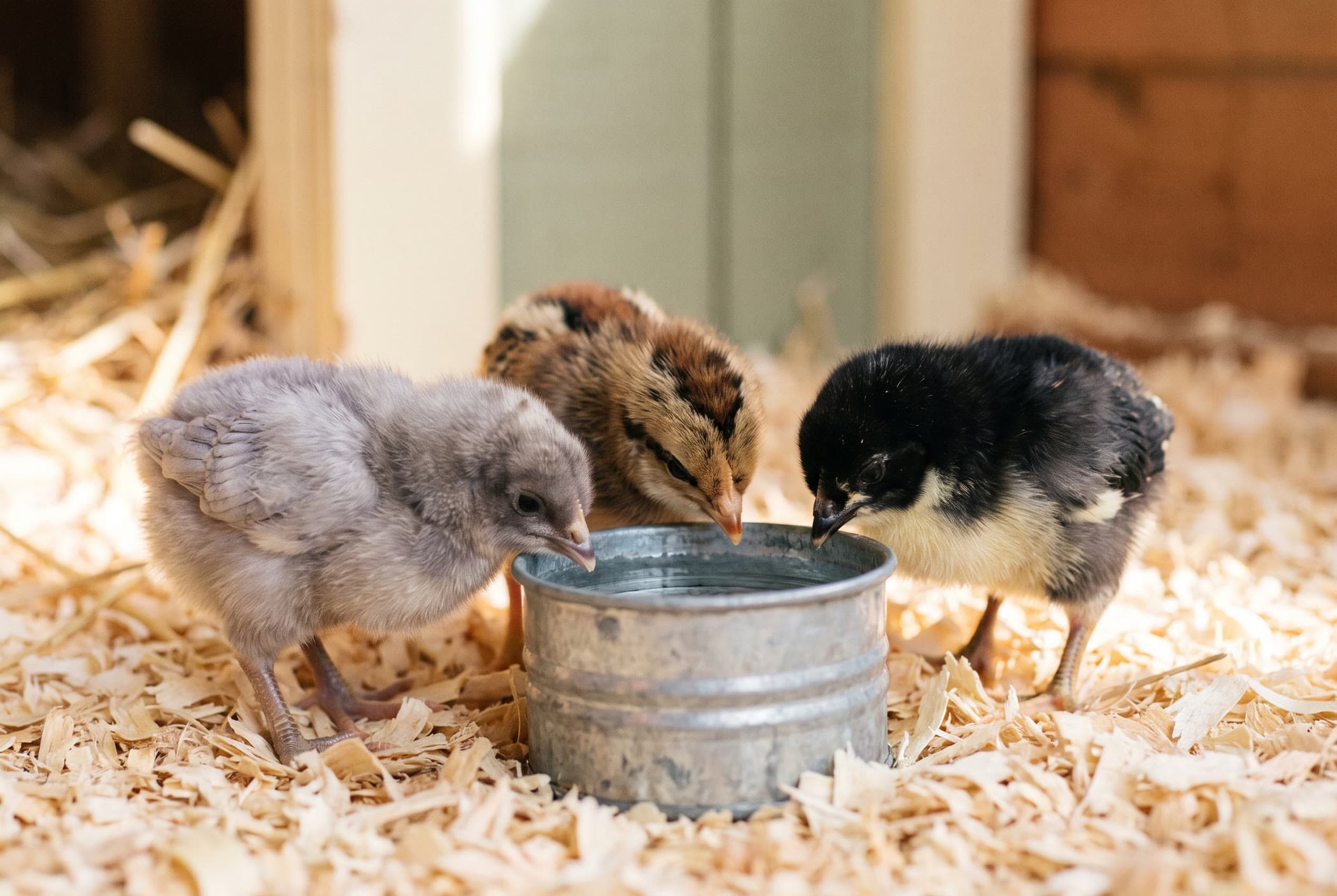
When chicks arrive, dip each beak gently into the water before you set the chick down, so they know where to find it. Use room-temperature water in a shallow chick waterer; if it's deep enough for a chick to fall into, add a layer of clean marbles or pebbles.
Then food
Scatter a little starter on the paper towels at first — chicks peck at what they can see — and keep the feeder full. Once they're eating confidently after a couple of days, you can remove the paper towels.
Check their bottoms
Look at each chick's vent during the first days. Sometimes droppings dry and block it — known as pasty butt — which can become serious quickly. If you see it, soften it with a warm, damp cloth and gently clean it away.
Keep it calm, keep it clean
New chicks sleep a lot. Keep the brooder somewhere quiet, away from pets and drafts, and keep handling short and gentle. And always wash your hands after handling chicks or anything in the brooder — even healthy poultry can carry germs such as Salmonella.
If something seems off
A chick that's lethargic, standing apart with its eyes closed, or not eating or drinking needs attention. Recheck your temperatures first — most early problems come back to heat — and reach out with any questions about chicks from our flock. We're glad to help.